







On this page
HubSpot vs Salesforce is the CRM decision most growing companies face at some point. Both can run a sales team of any size. The difference is where they start: HubSpot is designed to be useful on day one with little setup, while Salesforce is designed to be shaped around exactly how your company sells, which usually means an admin or a partner.
Rather than list hundreds of features, we priced both for a realistic small team of five and looked at what changes as you move up the plans. Prices are from each vendor’s page on October 17, 2026.
Full disclosure: we make DoubleScale, a WordPress CRM. It appears in short side notes and its own section; everything about HubSpot and Salesforce comes from their own pricing pages.
Pick HubSpot if you want a CRM your team can use this week, with marketing tools in the same place and a free tier to start.
Pick Salesforce if your sales process is complex, you expect to customize objects and approvals heavily, and you can budget for setup and higher editions.
HubSpot vs Salesforce at a glance
| HubSpot | Salesforce | DoubleScale | |
|---|---|---|---|
| Free tier | Free CRM for up to 2 users | Free Suite listed at $0 | Free plugin, unlimited contacts |
| Entry paid plan | Starter, about $20 per seat/mo (regular) | Starter Suite, $25 per user/mo | Basic, $99/yr per site |
| Mid plan | Professional, $90 per seat/mo | Pro Suite, $100 per user/mo (annual contract) | Plus, $199/yr (5 sites) |
| Top published plan | Enterprise, $175 per seat/mo | Max, $550 per user/mo | Enterprise, $399/yr (25 sites) |
| Setup effort | Low | Medium to high | Low (inside WordPress) |
| Customization | Good | Exceptional | Good |
Vendor pricing pages, October 17, 2026. HubSpot Starter was on offer at $7 per seat when we checked.
What five people will pay per year
Salesforce lists Starter Suite at $25 per user a month (billed monthly or annually) with email marketing, sales flows and lead routing; Pro Suite at $100 (billed annually, contract required) with quoting, forecasting and more automation; then Core at $195, Advanced at $395 and Max at $550 per user a month, billed annually. AI is added on Core and above, with Agentforce for Sales from $125 per user a month.
HubSpot charges per seat, billed annually: Starter about $20 at regular price, Professional $90 and Enterprise $175, with HubSpot credits for AI features and marketing-contact limits on top.
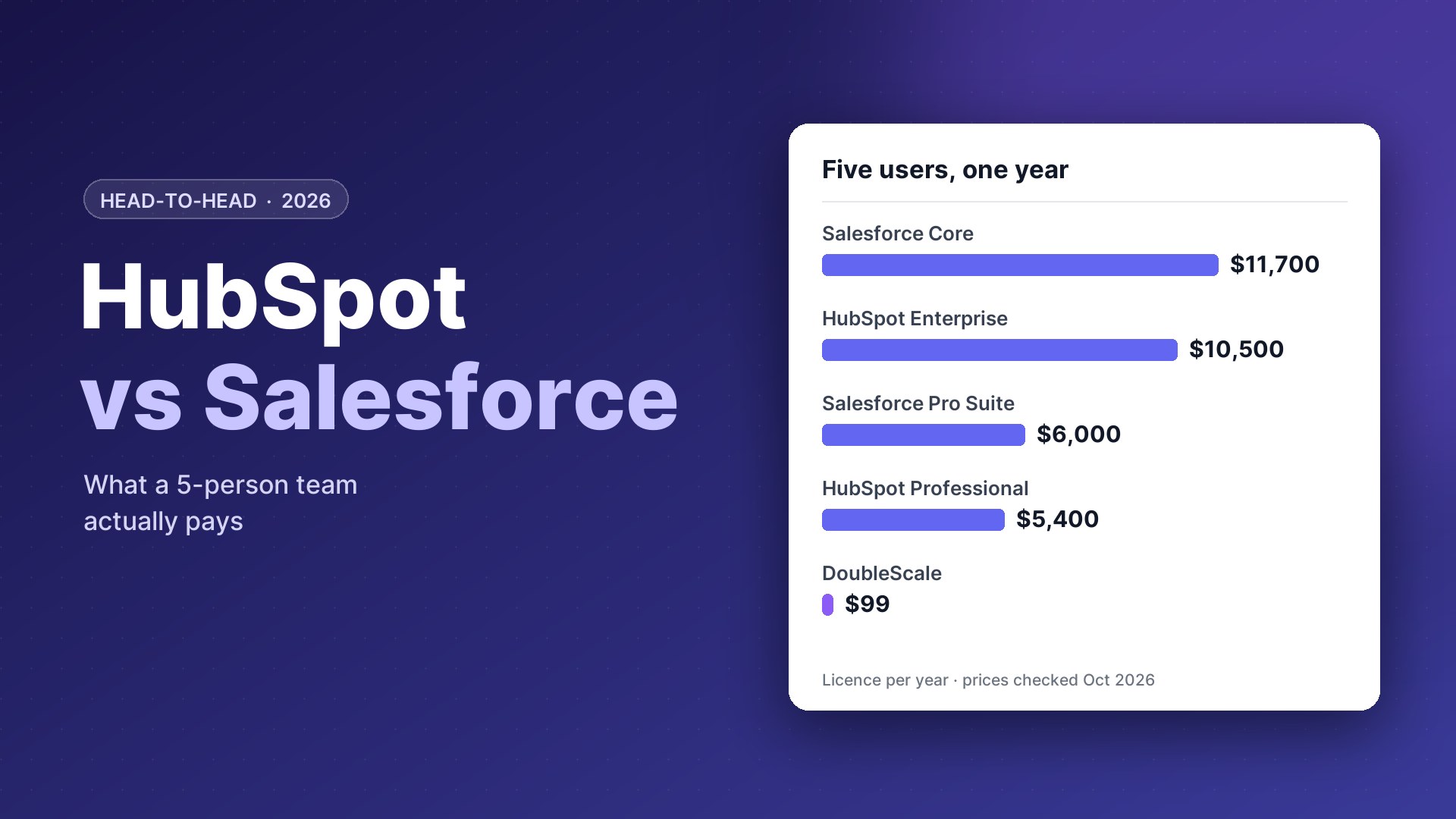
| Plan for 5 users | Per year |
|---|---|
| HubSpot Starter (regular) | $1,200 |
| Salesforce Starter Suite | $1,500 |
| HubSpot Professional | $5,400 |
| Salesforce Pro Suite | $6,000 |
| HubSpot Enterprise | $10,500 |
| Salesforce Core | $11,700 |
| Salesforce Advanced | $23,700 |
| DoubleScale Basic (1 site, any number of users) | $99 |
Licence only. Setup, partners, add-ons and HubSpot marketing-contact tiers are extra.
At each level the two are close on licence; the bigger difference is usually the cost of setting Salesforce up.
Our take: HubSpot has the edge slightly cheaper at each level, and cheaper still once you count setup.
Which is easier to live with?
HubSpot is famous for being easy: a clean interface, sensible defaults and onboarding that gets a small team working quickly. Salesforce has improved a lot, and its Starter and Pro Suites are aimed at small businesses, but it is still a platform you configure. Most companies on the higher editions have an admin, in-house or through a partner.
Our take: HubSpot has the edge.
Which handles a complex sales process better?
Salesforce. Custom objects, approval processes, territory rules, forecasting and a deep partner ecosystem (its marketplace is now called AgentExchange) let it model almost any sales motion. HubSpot covers custom objects and advanced automation on its higher plans, and for most small and mid-sized teams that is enough.
Our take: Salesforce has the edge.
Looking elsewhere?Ruling Salesforce out? Read Salesforce alternatives for small business for lighter options.
Marketing tools
HubSpot’s marketing tools live in the same platform as its CRM, which is a big reason small companies choose it. Salesforce includes email marketing and campaign analytics in Starter and Pro Suite, and sells deeper B2B marketing separately: Account Engagement Growth starts at $1,250 a month for up to 10,000 contacts, billed annually.
Our take: HubSpot has the edge.
Looking elsewhere?Want HubSpot’s ease at a lower price? See HubSpot alternatives for small business.
Runs your entire business
A third option: DoubleScale
If you are a small team whose website already runs on WordPress, DoubleScale gives you a CRM, email marketing and sales tools without per-user pricing or a separate platform.
Its automations support nested conditions and goals, Pro adds pipelines, lead scoring and contracts, and the free plugin includes proposals, invoices, bookings and a helpdesk.
Modular by design. Turn on only the modules you need from one Control Modules panel; everything else stays out of your way.
- Email campaigns
- Automations
- Sales pipelines
- Proposals & invoices
- Contracts
- Booking
- Helpdesk
- Forms
- Projects
- Tasks
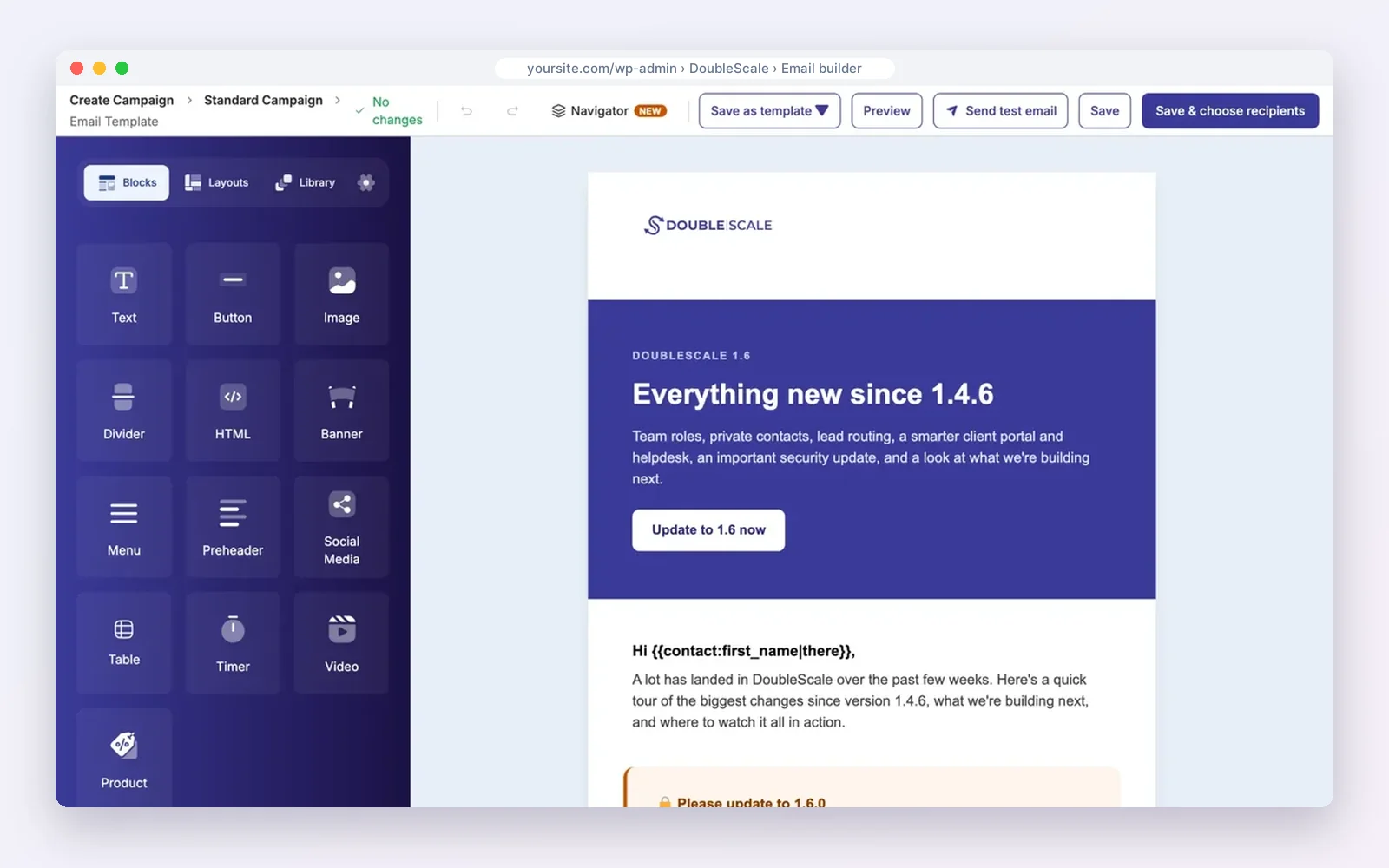
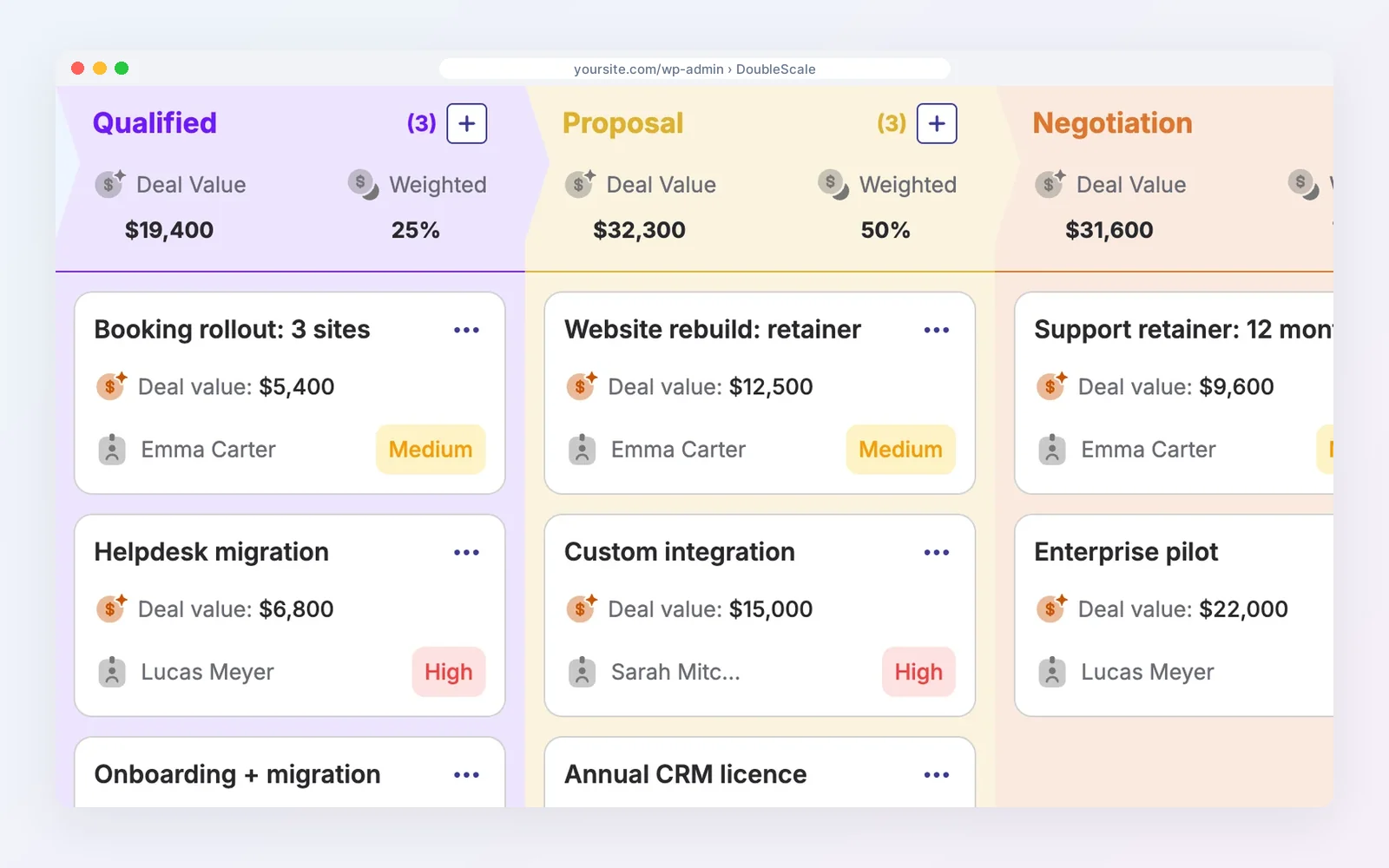
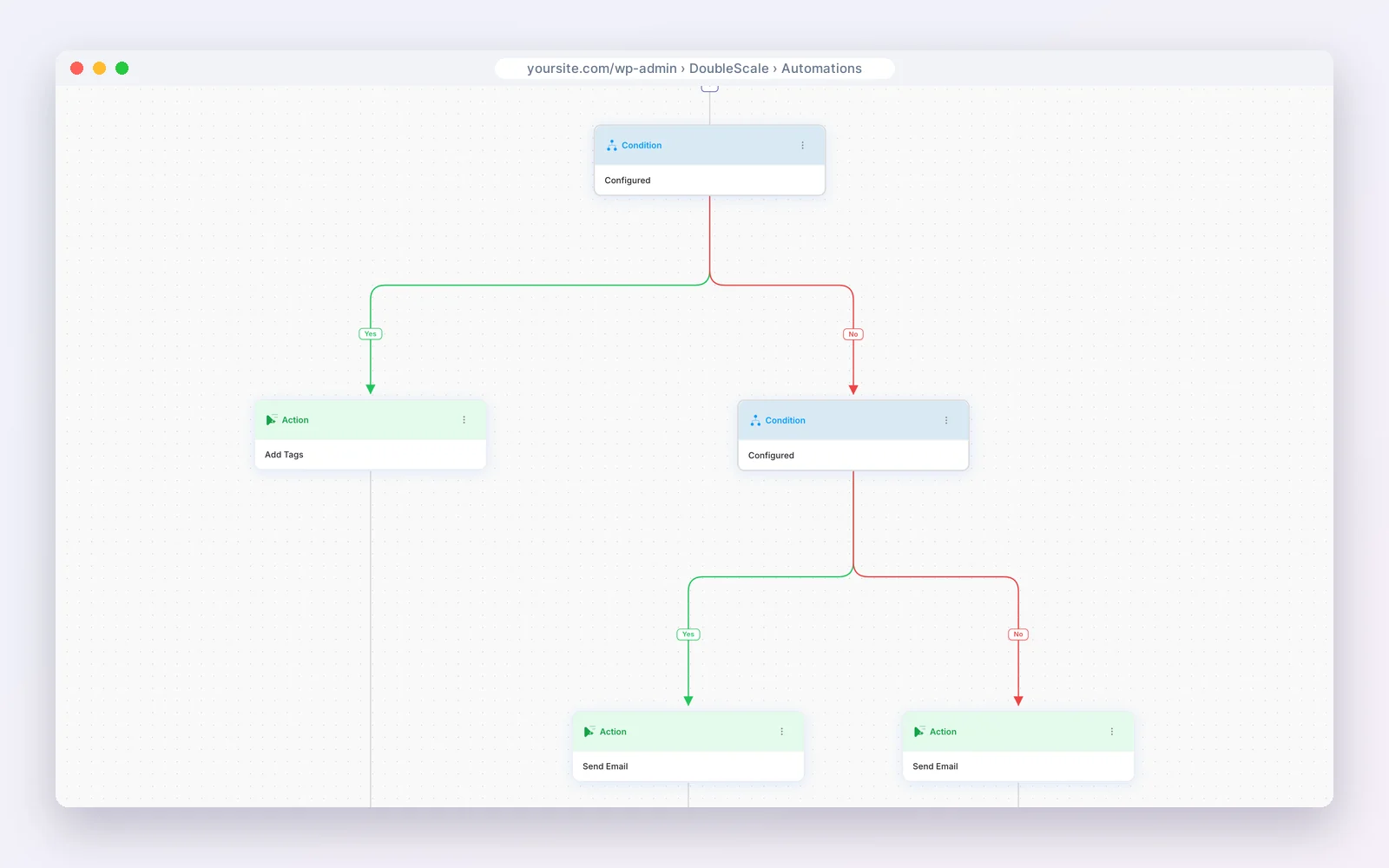
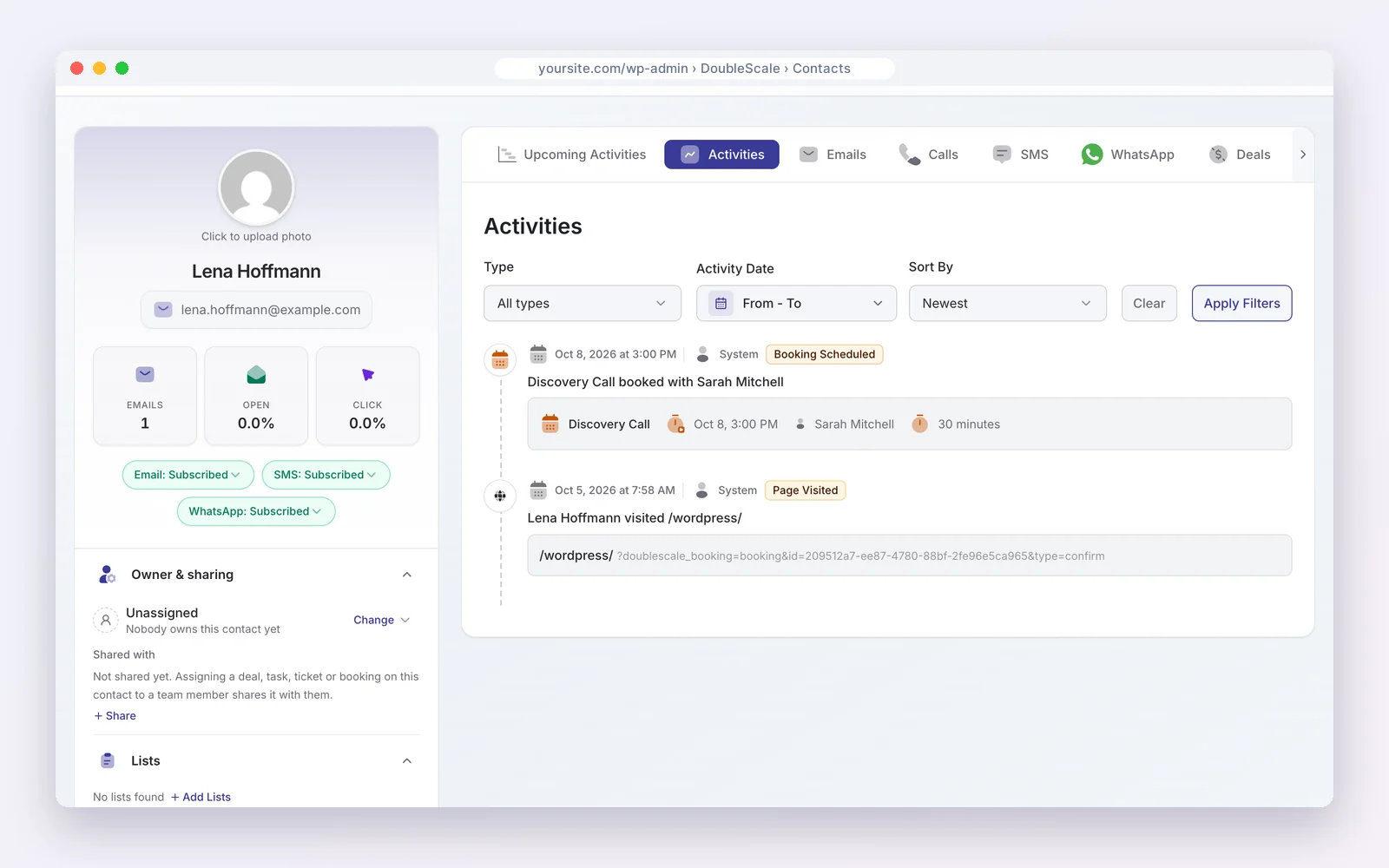
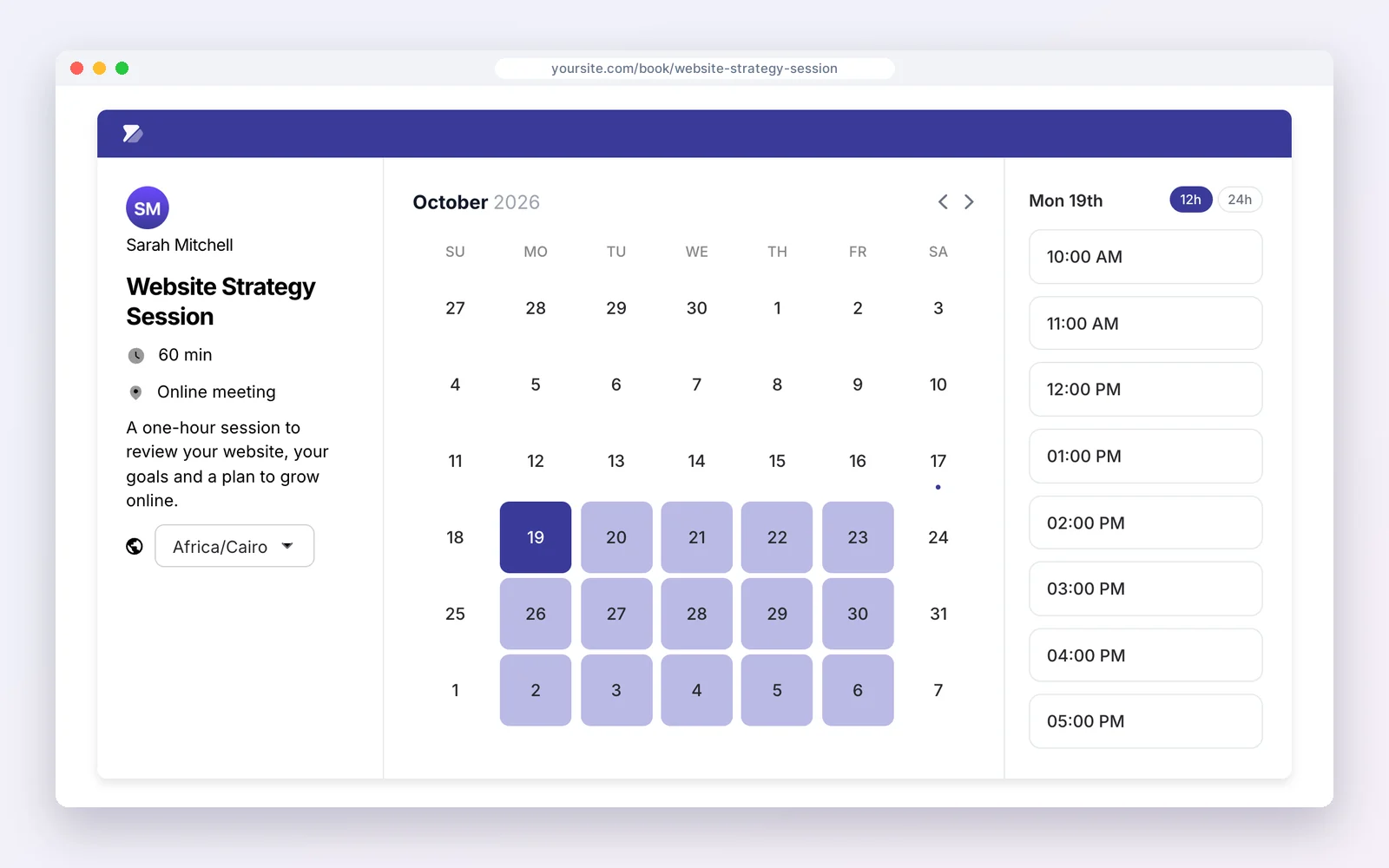
Free on WordPress.org · Unlimited contacts · Pro from $99/yr per site
DoubleScale is the better pick if…
- You have a small team and a simple, repeatable sales process.
- You want marketing and sales on one contact record inside WordPress.
- Per-user pricing makes HubSpot and Salesforce hard to justify.
Stick with the big platforms if…
- You need deep customization, approvals or territory management.
- You want an enterprise ecosystem and certified partners.
- Your team works mostly outside WordPress.
Head-to-head: DoubleScale vs HubSpot.
Disclosure: we make DoubleScale. The screens above are real, and every price for the other tools comes from their own pricing pages.
So, which should you choose?
| Your situation | Choose |
|---|---|
| Small team that needs a CRM this week | HubSpot |
| Founder starting from zero | HubSpot Free |
| Complex process, custom objects, approvals | Salesforce |
| Company with an admin or a Salesforce partner | Salesforce |
| Small team on WordPress, one flat price | DoubleScale |
How we compared: every price was read on the vendor’s own pricing page on October 17, 2026 (USD). Salesforce prices are per user per month; Starter Suite can be billed monthly or annually, the others annually. HubSpot prices are per seat, billed annually. Prices change often, so check the vendor’s page before you buy.
Questions people ask
Is HubSpot cheaper than Salesforce?
At each comparable level, slightly: for five users, HubSpot Professional is $5,400 a year against $6,000 for Salesforce Pro Suite. Salesforce usually costs more to set up.
Is Salesforce harder to use than HubSpot?
Generally yes. Salesforce is more configurable, which means more setup; HubSpot is designed to work with little configuration.
Does Salesforce have a free plan?
Its pricing comparison lists a Free Suite at $0. HubSpot’s free CRM covers up to two users.
Can a small business use Salesforce?
Yes. Starter Suite ($25 per user a month) and Pro Suite ($100) are aimed at small businesses.
Is there a CRM without per-user pricing?
Yes. DoubleScale is priced per WordPress site with unlimited users and contacts.
More head-to-head comparisons
- ActiveCampaign vs HubSpot
- GoHighLevel vs HubSpot
- Pipedrive vs HubSpot
- Zoho CRM vs HubSpot
- Salesforce vs GoHighLevel
- GoHighLevel vs Pipedrive
- Pipedrive vs Salesforce
- Zoho CRM vs Salesforce
- Pipedrive vs Zoho CRM
Pipelines, email marketing, invoices and bookings inside WordPress.
Get our guides first on GoogleAdd DoubleScale as a preferred source and our articles show up more often in your Top Stories.

Mohamed Magdy, Founder & CEO, DoubleScale
Mohamed Magdy is the founder and CEO of DoubleScale, the all-in-one CRM for WordPress. He writes about CRM, email marketing and automation for WordPress businesses.
Practical CRM tips, once a month
Guides on growing with WordPress: lead capture, email marketing, automations and sales. No spam, unsubscribe anytime.